Start with received money and a priority list
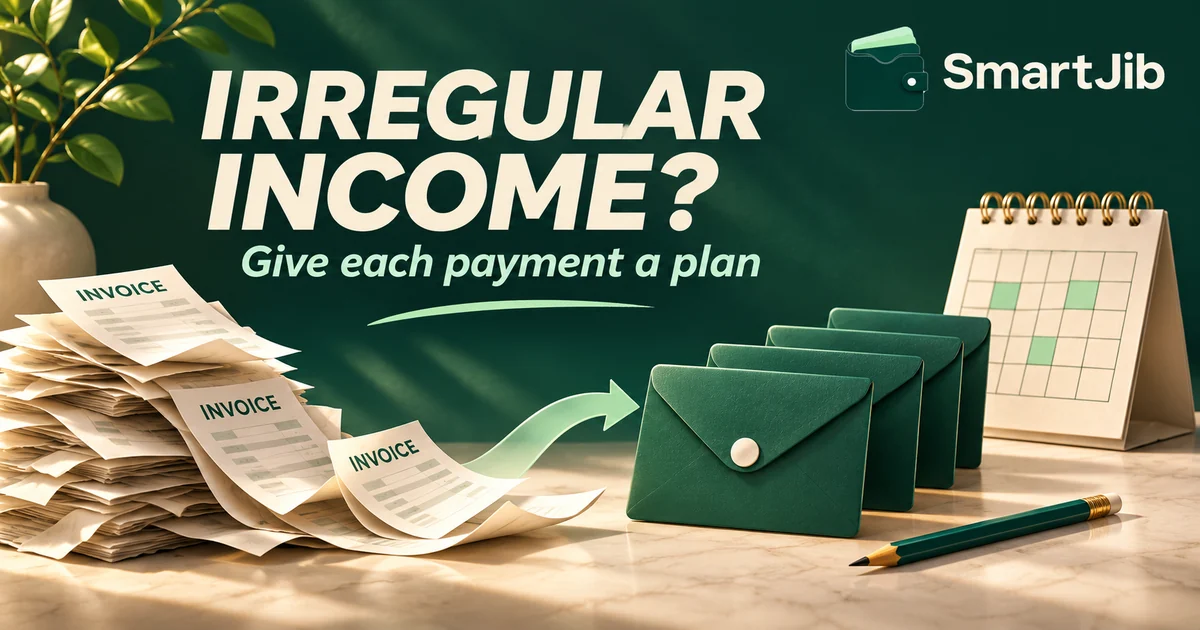
Zero-based budgeting for irregular income assigns money when it becomes available. A freelancer, seasonal worker or commission earner can keep a forecast, but an invoice or expected commission is not spendable cash. Separate the forecast from the funded plan.
Begin with money genuinely available for personal use. Exclude money already committed to business costs, taxes or another obligation. Tax treatment depends on your situation and country; this article does not set a tax rate.
Build a minimum-cost month before allocating extras
List essentials and their due dates: housing, food, essential utilities, transport needed for work, health and required debt payments. Then list predictable irregular expenses and flexible wants. This is a sequence of decisions, not a promise that every income level can cover every bill.
Review several months of income to understand low periods. MoneyHelper recommends planning conservatively when earnings vary. A low-month estimate helps forecast risk, but even that estimate must not be treated as cash already received.
First payment: allocate 3,000 MAD
All amounts in this scenario are fictional. Imagine 3,000 MAD becomes available for personal use on the first day of the month after separate business obligations have been considered. Assign it to the costs due before your next possible payment.
- Housing due first: 1,800 MAD
- Groceries for the initial period: 600 MAD
- Essential transport: 250 MAD
- Utilities: 250 MAD
- Small contingency buffer: 100 MAD
- Total funded: 3,000 MAD; unassigned: 0
Second payment: fund the remaining month
A further 2,000 MAD actually arrives later. Allocate groceries 500, transport 150, phone 100, required debt payment 400, annual-expense reserve 250, income buffer 400 and flexible spending 200. These allocations total 2,000 MAD. Across both payments, 5,000 MAD has been received and assigned.
If the second payment does not arrive, those later allocations are unfunded. Look at the bill calendar immediately. Contact the relevant provider about available arrangements where needed, pause optional commitments and review accessible support. A balanced forecast cannot replace money that has not arrived.
Use good months to make future months less fragile
Choose a named income buffer for future essentials. Its first target might be one specific upcoming bill rather than a broad number that feels unreachable. Define the target from your own essential costs and income uncertainty.
When using that buffer in a quiet month, reduce it in your records. Do not label the withdrawal as new earnings. If the buffer repeatedly falls, reassess the underlying costs or realistic earning pattern before raising discretionary spending.
Review dates as well as totals
A month can appear fully funded while a bill falls due before a customer pays. Keep a weekly view of opening money, confirmed incoming payments and outgoing commitments. Distinguish payment due dates from estimated customer payment dates.
A useful payday routine is to record what arrived, protect obligations due soon, fill essential category gaps and only then allocate to later priorities. Revisit the sequence when circumstances change; your first version is a working plan.
Track the plan without mixing business and personal money
Keep records that let you distinguish business obligations, personal allocations and transfers between your own money locations. A transfer is not an extra sale, and moving money into a personal wallet does not make it income twice.
Use SmartJib's budgeting and expense tracking features to review your personal plan, or maintain the same categories on paper. Do not assume a personal budget tracker replaces business accounting or tax records. The related template guide gives a copyable allocation structure.
A three-tier priority system for irregular income
When income changes every month, rank your spending in three tiers: tier one covers survival (rent, food, transport, minimum debt payments), tier two covers stability (insurance, phone, modest savings), and tier three covers everything else. Each time money arrives, fund tier one completely before tier two, and tier two before tier three.
This ordering protects you from the most common freelancer mistake: spending a good month as if it were normal, then scrambling in a slow month. The tiers make the priority order explicit instead of leaving it to memory.
- Tier 1: survival and minimum debt payments
- Tier 2: stability and a small buffer
- Tier 3: everything else
- Fund tiers in order, every time money arrives
Protecting the plan from lifestyle creep
Lifestyle creep is what happens when a good month quietly raises your baseline: a nicer restaurant, a bigger data plan, a subscription you forget. The defence is simple — when income rises, raise savings first, not spending. A common rule is to split any increase: half to goals, half to comfort.
Review the comfort half honestly: if you would not pay for it in a slow month, it is not really a need. Keeping the baseline low is what makes irregular income manageable instead of stressful.
- Raise savings before raising spending
- Split any income increase between goals and comfort
- Ask: would I pay for this in a slow month?
- Keep the baseline low
SmartJib
Frequently asked questions
Can I use zero-based budgeting without a fixed salary?
Yes. Assign money as it arrives and fund priorities in order. Keep expected payments in a separate forecast so unpaid work does not support today's spending.
Should I budget from my average income?
An average can help longer-term forecasting, but it can hide weak months. Use conservative scenarios and fund immediate allocations with money actually available.
What if a customer pays late?
Mark the expected payment as unreceived, check bills due before the revised date and adjust unfunded plans. Use an existing buffer only if available and record the reduction.
What buffer size suits irregular income?
A practical starting point is one month of tier-one expenses (example). Freelancers with very uneven income often aim for two to three months before investing the surplus. Adjust the size to how long your dry spells usually last.
Should savings come before or after debt payments?
Always fund minimum debt payments first — missing them costs fees and damages your record. Then build a small buffer, then attack expensive debt with extra payments. The exact order for your debts is a choice to make with your numbers in front of you.
SmartJib keeps budget envelopes separate from bank, home, and wallet balances.
Also: Budget tracker MAD guide · 4 budgeting methods explained · Why SmartJib is private by design
Educational content, not financial advice. Figures are worked examples; verify rates and rules with the official source. Editorial policy.